
What Makes Fall a Great Time for Tampa Bay Fishing?
Most anglers think Tampa Bay hits its peak in spring or early summer. Then they pack it in once the heat breaks. Big mistake. Fall doesn't just offer relief from the Florida sun — it brings some of the best fishing conditions of the year. Water temps drop, bait floods the flats, and species that vanished in July suddenly show up hungry. If you're not on the water between September and November, you're missing the window when everything lines up.
The bay doesn't advertise this shift. It just happens. And the anglers who know what to look for — the ones tracking tide charts, watching bait patterns, and adjusting their approach — clean up. The rest wonder why their summer tactics stopped working.
Water Temperature Drops and Fish Start Moving
When August finally loosens its grip, Tampa Bay cools down fast. Surface temps that hovered near 90 degrees in midsummer slide into the low 80s, then the high 70s. That might not sound dramatic, but for fish, it's everything. Species that buried themselves in deep channels or hugged structure during the heat suddenly push back into the shallows. Grass flats that looked dead in July come alive again.
Redfish move out of their summer hideouts and start cruising open water. Snook return to the mangroves and oyster bars. Trout show up on the flats in numbers you won't see any other time of year. The drop in temperature doesn't just make fish more comfortable — it makes them more aggressive. They feed harder, fight longer, and show up in places that are easier to reach from shore or a kayak.
Baitfish Flood the System
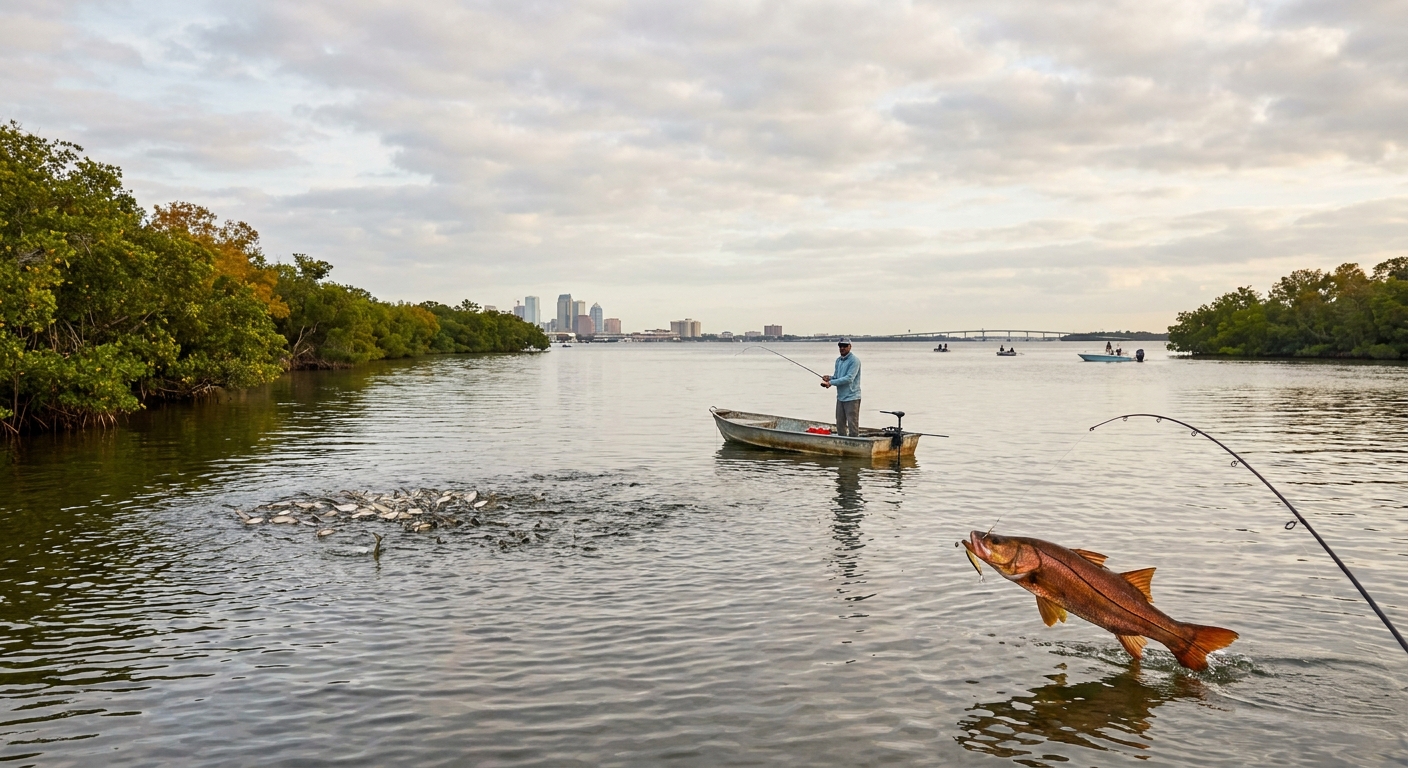
Fall is when Tampa Bay becomes a buffet. Mullet, glass minnows, sardines, and threadfin herring flood the estuaries in massive schools. These aren't scattered pods — we're talking acres of bait pushing through passes, stacking up on grass beds, and getting corralled by every predator in the bay. Where the bait goes, the gamefish follow.
You'll see it on every tide. Explosions on the surface. Birds diving. Water boiling as snook, jacks, and tarpon rip through schools of mullet. If you can match the hatch — or just cast into the chaos — you're in business. This abundance doesn't last forever, but while it does, it's some of the most exciting inshore fishing you'll find anywhere.
- Mullet runs peak in September and October, drawing big predators into skinny water
- Glass minnows congregate around docks and bridges, perfect for trout and snook
- Threadfin herring move through channels and flats, attracting redfish and mackerel
- Sardines school tight near structure, making them easy targets for gamefish
- Pinfish and croakers stay active through fall, offering consistent live bait options
Redfish Show Up in Force
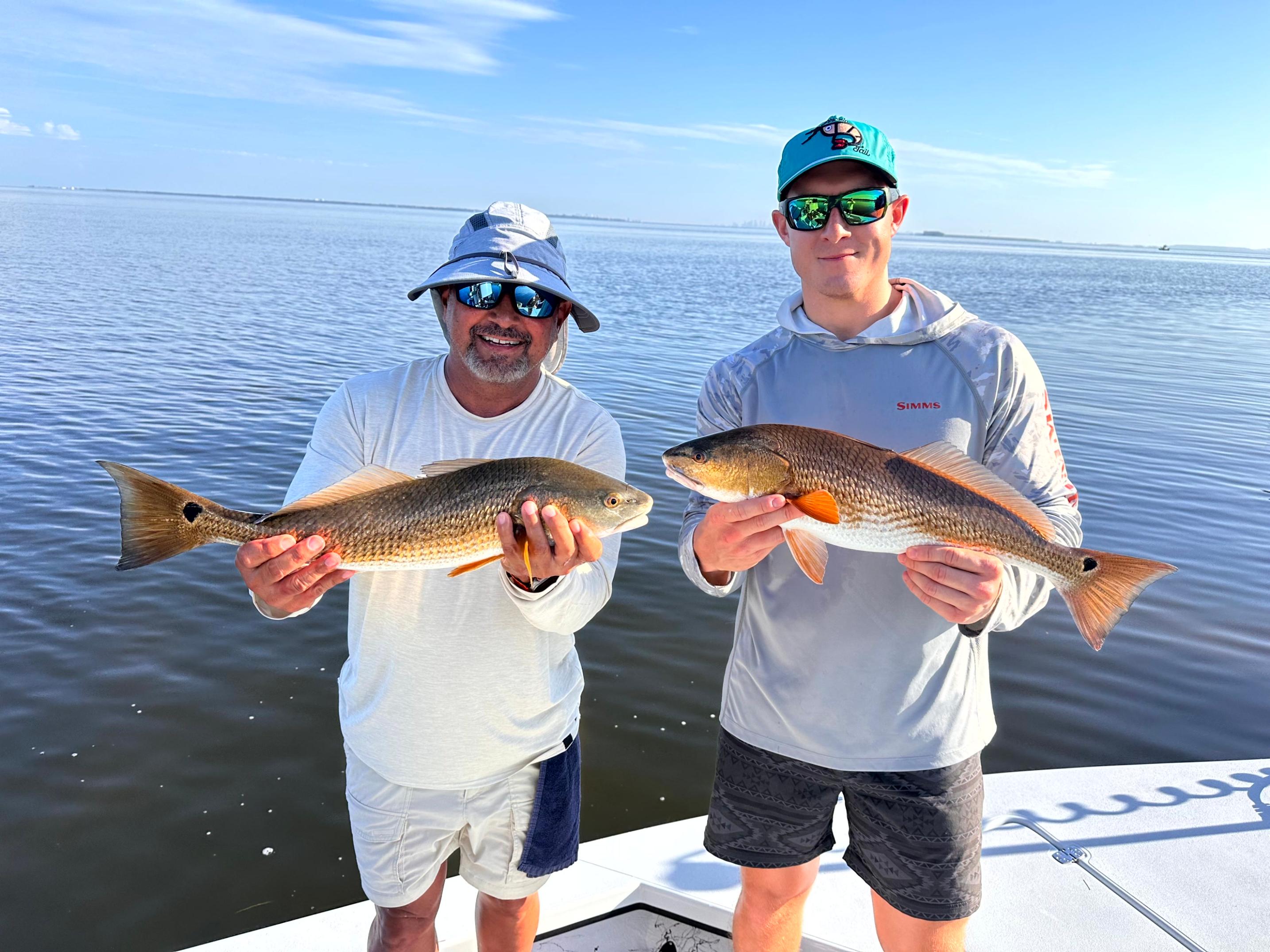
Fall is red drum season. Not just a few tailing fish on a flat — we're talking schools of oversized bull reds staging near passes and deep cuts. They're not there by accident. These fish are preparing to spawn, and they congregate in numbers that can make your reel scream. Even slot-sized reds move more freely this time of year, cruising flats and ambushing bait with zero hesitation.
The best part? You don't need a big boat or fancy gear to get in on it. Plenty of reds move within casting distance of shore, especially on incoming tides when bait pushes into the shallows. A well-placed cut bait or gold spoon is all it takes. Miss this window, and you're waiting another year for the same setup.
Snook Transition Back Inshore
Summer snook hang around beaches and passes, chasing spawning opportunities in deep water. Once fall hits, they abandon those spots and flood back into the bay. Mangrove shorelines, residential docks, creek mouths — anywhere with structure and current becomes prime territory. These fish aren't lethargic post-spawn stragglers. They're feeding machines trying to pack on weight before winter.
Target them on moving water, especially around dawn and dusk. Live bait works, but so do swimbaits and topwater plugs if you're willing to work them slow. The key is patience and precision. Snook don't chase food down in fall — they wait in ambush and strike when the target drifts into range.
- Docks with deep water and shade hold snook during midday heat
- Mangrove roots near channel edges produce consistent strikes
- Bridges with strong current concentrate bait and predators
- Oyster bars at the mouths of creeks are snook magnets on high tides
- Residential canals with seawalls and boat lifts often hide big fish
Trout Fishing Gets Serious
Spotted seatrout love fall. They spread out across grass flats, feeding heavily as water temps stabilize. You'll find them in water so shallow their backs break the surface, slashing at shrimp and baitfish with reckless abandon. This is the season when trout fishing stops being a grind and starts being a numbers game.
The best spots are usually the most obvious — healthy grass beds with moderate depth and clean water. Trout aren't picky about presentation in fall. A popping cork with live shrimp works. So does a soft plastic paddle tail or a suspending twitch bait. The fish are there, and they're eating. Your job is just to put something in front of them.
Fewer Boats on the Water
Summer weekends in Tampa Bay look like a boat show. Every ramp is packed, every flat has three kayaks on it, and every good spot has someone already fishing it. Fall changes that equation fast. Tourists leave. Fair-weather anglers disappear. The water opens back up, and suddenly you've got room to work.
This isn't just about comfort. It's about access. You can hit prime locations without jockeying for position or waiting for someone else to move. You can fish your game without pressure from crowds or wakes from passing traffic. That kind of space makes a difference, especially if you're sight-casting or working structure that requires stealth.
- Boat ramps clear out after Labor Day, cutting wait times to nothing
- Popular flats and shorelines become accessible again without competition
- Marinas and tackle shops are less chaotic, with shorter lines and better service
- Guided charters have more availability and flexible scheduling
- Wildlife sightings increase with fewer boats disturbing feeding and nesting areas
Weather Windows Stay Wide
Florida summers come with daily thunderstorms, oppressive humidity, and heat that shuts down fishing by mid-morning. Fall flips that script. Storms become less frequent. Mornings stay cool longer. You can fish all day without melting, and the bite often stays strong through midday when water movement keeps fish active.
This extended comfort zone means more time on the water and more opportunities to dial in patterns. You're not racing the clock or the weather. You can experiment, move around, and adjust without feeling like you're fighting the elements. That flexibility is what turns good days into great ones.
Tactics That Work When the Season Shifts
Fall fishing isn't about reinventing your approach — it's about refining it. The fish are there, but they're moving differently and feeding on specific prey. Match your tactics to the conditions, and you'll stay ahead of the curve.
- Downsize your leaders and go lighter on the tackle as water clears up
- Fish moving tides hard, especially incoming water pushing bait into shallows
- Use natural colors and patterns that mimic local baitfish
- Focus on structure during slack tides when current isn't doing the work
- Keep a variety of bait options ready — live, cut, and artificial all produce
Timing Matters More Than Luck
The anglers who dominate fall fishing aren't the ones with the fanciest gear or the biggest boat. They're the ones who show up when conditions align. They check tide charts. They watch moon phases. They know when bait is moving and where fish will be waiting. Fall rewards preparation, not guesswork.
This is the season when everything Tampa Bay has to offer comes together. Cooler weather, aggressive fish, abundant bait, and open water. Miss it, and you're stuck waiting for spring while the rest of us are stacking redfish and snook. The bay doesn't hand out second chances — it just moves on to the next season.
Let’s Get You on the Water This Fall
Fall in Tampa Bay is too good to miss, and there’s no better time to make the most of these prime fishing conditions. If you’re ready to experience the action firsthand, let’s plan your next trip together. Give us a call at 813-732-5971 or book now to secure your spot and get out there while the bite is hot.
← Previous Post
Recent Posts
-
What Makes Fall a Great Time for Tampa Bay Fishing?
October 6, 2026
-
Can Beginners Enjoy a Tampa Fishing Charter?
September 22, 2026
-
What Should You Wear on a Tampa Fishing Charter?
September 8, 2026
-
Should You Book a Morning or Afternoon Tampa Fishing Charter?
August 25, 2026
-
Can You Catch Redfish Year-Round on a Tampa Fishing Charter?
August 11, 2026